Introduction
Fiberglass Reinforced Polymer (FRP) is a modern composite material that has transformed industrial construction, infrastructure, and safety equipment manufacturing. Understanding FRP material properties is essential for engineers and procurement professionals who need to specify the right material for demanding applications. This complete guide examines the mechanical, physical, thermal, and electrical characteristics of FRP composites, providing detailed comparisons with traditional materials like steel and aluminum.
Whether you are evaluating FRP for handrail systems, structural platforms, or chemical processing equipment, knowing the full range of FRP material properties helps you make informed decisions about strength, durability, weight savings, and long-term performance. We will cover tensile and flexural strength, corrosion resistance, UV stability, fire behavior, electrical insulation, and the specific load capacity specifications relevant to industrial FRP handrail applications.
Key FRP Material Properties Defined
The key FRP material properties span mechanical strength, physical characteristics, chemical resistance, and electrical behavior. Unlike homogeneous materials such as steel or aluminum, FRP is a composite system consisting of reinforcing fibers (typically glass) embedded in a polymer resin matrix. This combination creates a material with unique property profiles that can be engineered for specific applications.
FRP composites are anisotropic, meaning their properties vary depending on the orientation of the reinforcing fibers. Engineers exploit this characteristic to optimize strength in the direction of primary loading while minimizing material usage in other directions. The most important categories of FRP material properties include mechanical strength (tensile, flexural, and impact), physical attributes (density, hardness, and thermal expansion), chemical resistance (corrosion behavior in various media), and electrical characteristics (insulation and dielectric strength).
Understanding these properties is critical when sourcing FRP handrail material specifications for industrial safety systems. The following subsections break down each property category in detail, providing typical numerical values and comparisons with conventional materials.
Mechanical Strength Properties
FRP composites exhibit excellent mechanical strength across multiple loading modes. The tensile strength of standard structural FRP profiles ranges from 200 MPa to 450 MPa, depending on the glass content and fiber orientation. The flexural strength — a critical parameter for handrail beams and platform grating — typically falls between 200 MPa and 350 MPa. The flexural modulus (stiffness) ranges from 15 GPa to 30 GPa, providing the rigidity needed for structural applications.
Load Capacity and Span Capabilities
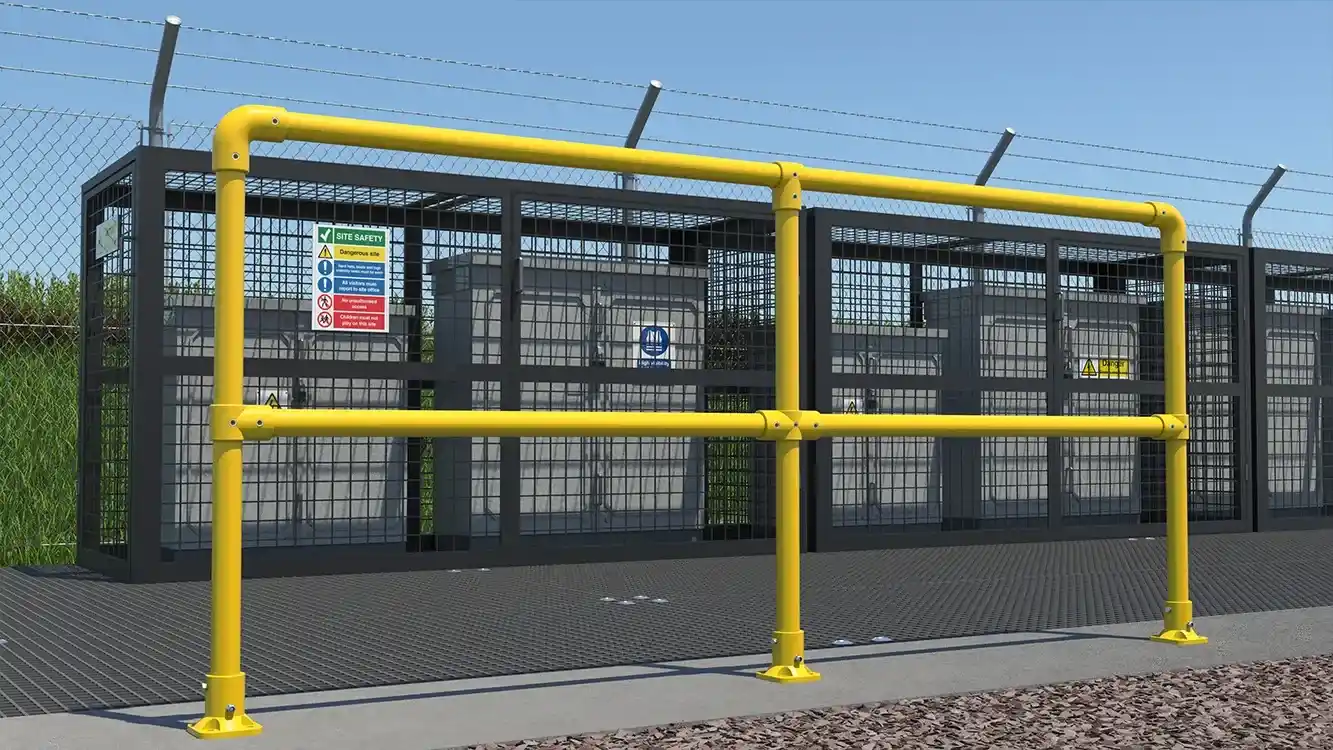
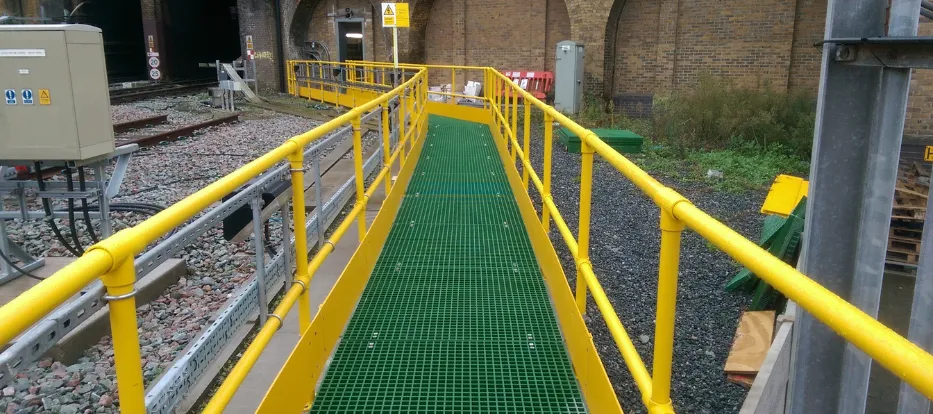
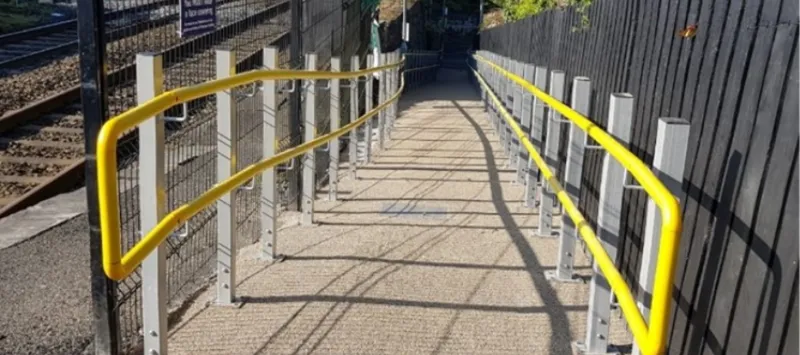
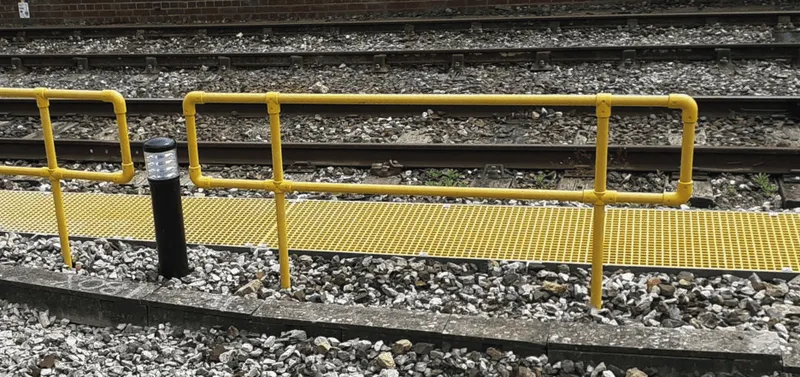
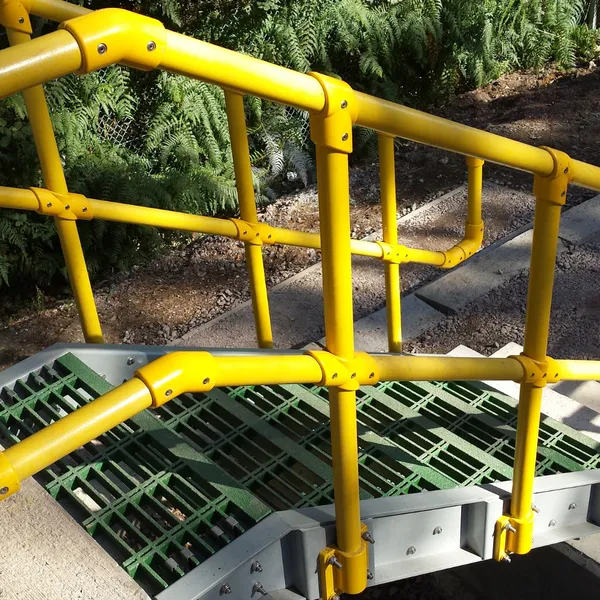
For safety equipment designers, FRP handrail load capacity specifications and FRP handrail span specifications are among the most important design parameters. A standard FRP handrail system with a 38 mm by 38 mm square tube profile typically supports distributed loads of 1.5 kN/m to 3.0 kN/m over spans of 1.5 m to 2.5 m, depending on the specific resin system and glass content. Heavier-duty profiles can achieve spans exceeding 3.0 m under uniform loading conditions.
The strength-to-weight performance of FRP is exceptional. With a density of approximately 1.6–2.0 g/cm³ (roughly one-quarter that of steel), FRP offers tensile strengths per unit weight that exceed most metals. This makes FRP an efficient choice for applications where minimizing dead load is critical, such as elevated walkways, mezzanine platforms, and marine structures.
Physical and Chemical Properties
The physical and chemical properties of FRP make it uniquely suited for harsh industrial environments. The material density ranges from 1.5 to 2.0 g/cm³, roughly 75% lighter than steel and 30% lighter than aluminum. This low density translates directly into reduced transportation costs, easier installation, and lower structural support requirements.
FRP exhibits very low thermal conductivity (0.3–0.5 W/m·K), making it a natural thermal insulator. Its coefficient of thermal expansion (10–20 × 10⁻⁶ /K) is similar to that of steel, allowing hybrid FRP-steel structures to accommodate temperature changes without excessive stress buildup at connection points.
From a chemical resistance standpoint, FRP outperforms most metals in acidic, alkaline, and saline environments. The polymer resin matrix — typically polyester, vinyl ester, or epoxy — acts as a protective barrier that prevents chemical attack on the reinforcing fibers. Material selection depends on the specific chemical exposure, with vinyl ester resins offering superior resistance to strong acids and organic solvents, while polyester resins provide cost-effective performance in standard industrial environments.
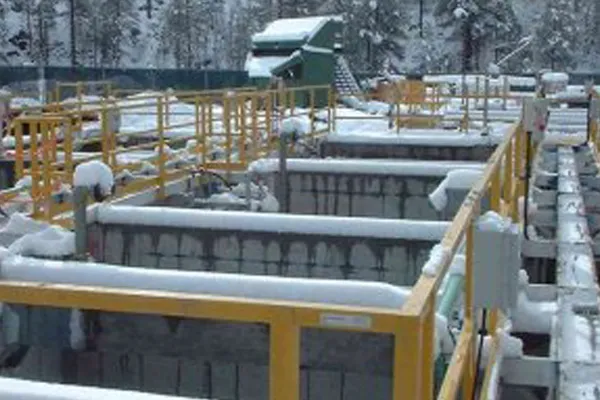
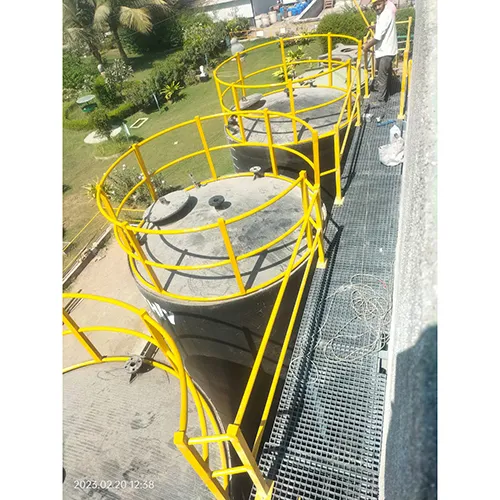
When evaluating FRP handrail material specifications, the choice of resin system directly impacts the handrail service life in corrosive environments. Wastewater treatment plants, chemical processing facilities, and marine installations all benefit from FRP inherent corrosion resistance, which eliminates the need for protective coatings or galvanization required by steel.
FRP vs Steel: Strength-to-Weight Ratio Analysis
One of the most frequently asked questions about composite materials is how FRP compares to steel in terms of strength and weight. The weight-to-strength ratio of FRP vs traditional materials reveals a clear advantage for FRP in applications where weight reduction is paramount.
| Property | FRP (Typical) | Structural Steel | Aluminum 6061 |
|---|---|---|---|
| Density (g/cm³) | 1.6–2.0 | 7.85 | 2.70 |
| Tensile Strength (MPa) | 200–450 | 400–550 | 240–310 |
| Specific Strength (kN·m/kg) | 100–280 | 50–70 | 90–115 |
| Corrosion Resistance | Excellent | Poor (requires coating) | Good |
| Thermal Conductivity (W/m·K) | 0.3–0.5 | 50–60 | 160–180 |
As the table illustrates, FRP offers a specific strength (strength per unit weight) that is 2 to 4 times higher than structural steel. This means an FRP component can carry the same load as a steel component at a fraction of the weight. When comparing FRP vs steel in terms of strength and weight, engineers find that FRP structures reduce dead load by up to 75%, enabling lighter supporting frameworks and simpler foundations.
In practical terms, a steel handrail that weighs 15 kg per linear meter can be replaced by an FRP handrail weighing just 4–5 kg per linear meter while maintaining equivalent load-bearing performance. This weight advantage translates to significant savings in installation labor, transportation costs, and structural support requirements.
Corrosion Resistance of FRP Composites
The corrosion resistance of FRP materials is one of their most valuable characteristics, particularly for outdoor and industrial applications where metal alternatives suffer rapid degradation. Unlike steel, which requires galvanization, painting, or periodic coatings to prevent rust, FRP is inherently resistant to corrosion across its entire cross-section. There is no surface coating to chip, peel, or wear away — the corrosion protection is integral to the material itself.
FRP composites resist attack from a wide range of aggressive media, including:
- Acids: Sulfuric acid, hydrochloric acid, nitric acid at moderate concentrations and temperatures
- Alkalis: Sodium hydroxide, calcium hydroxide, and other basic solutions
- Salts: Sodium chloride (seawater), magnesium chloride, and industrial salt solutions
- Organic solvents: Gasoline, diesel, oils, and many organic chemicals
- Atmospheric agents: Industrial pollutants, acid rain, UV radiation (with appropriate additives)
The specific level of corrosion resistance depends on the resin system selected. Vinyl ester resins provide the highest chemical resistance, making them the preferred choice for chemical processing plants and wastewater treatment facilities. Polyester resins offer good general-purpose resistance at a lower cost, suitable for most industrial and architectural applications. Epoxy resins excel in high-temperature and high-moisture environments.
For engineers specifying safety equipment, the corrosion resistance of FRP eliminates the recurring maintenance costs associated with repainting steel handrails or replacing corroded aluminum components. Over a 20-year service life, FRP handrails typically require zero maintenance related to corrosion, whereas steel handrails in corrosive environments may need recoating every 3–5 years.
Thermal and Electrical Properties of FRP
Understanding the thermal and electrical properties of FRP is essential for applications where temperature exposure, fire safety, or electrical insulation is a concern. FRP composites behave very differently from metals in both thermal and electrical domains, which can be either advantageous or limiting depending on the application.
Thermal Properties
FRP is an excellent thermal insulator with a thermal conductivity of just 0.3–0.5 W/m·K, compared to 50–60 W/m·K for steel. This low conductivity means FRP handrails and structures do not become uncomfortably hot or cold to the touch, improving worker safety in extreme temperature environments. The continuous service temperature range for standard FRP composites is typically –40°C to +100°C, with specialty resin systems extending the upper limit to 180°C or higher.
The coefficient of thermal expansion for FRP (10–20 × 10⁻⁶ /K) is comparable to steel and concrete, allowing FRP components to be integrated into mixed-material structures without excessive differential expansion issues. However, unlike isotropic metals, FRP expansion varies by direction due to its fiber orientation, which must be accounted for in detailed engineering designs.
Fire Performance
FRP composites are combustible, but fire-retardant additives and specially formulated resin systems can achieve Class 1 or Class A fire ratings per ASTM E84. These fire-retardant grades limit flame spread and smoke generation, making them suitable for building code-compliant installations in commercial and industrial facilities. Testing standards such as UL 94, ASTM E84, and BS 476 are commonly referenced in FRP material specifications.
Electrical Properties
FRP is an excellent electrical insulator with high dielectric strength (typically 10–20 kV/mm) and high surface resistivity (10¹²–10¹⁴ ohms/square). This makes FRP an ideal material for electrical infrastructure components such as ladder racks, cable trays, switchboard platforms, and substation structures. The non-conductive nature of FRP eliminates the risk of electrical shock when used in energized environments, providing an inherent safety advantage over metal alternatives.
Outdoor Durability and UV Resistance
The durability of FRP materials for outdoor industrial use is validated by decades of field performance in demanding environments worldwide. FRP structures installed in the 1980s and 1990s continue to perform without significant degradation, provided they were specified with appropriate resin systems and UV protection.
UV Resistance and Weathering
Exposure to ultraviolet radiation is the primary environmental challenge for FRP composites. Manufacturers address this by incorporating UV inhibitors into the resin matrix or applying UV-resistant gel coats. High-quality FRP products include a UV-protective surface veil (typically 0.25–0.5 mm thick) that prevents fiber bloom and surface degradation. With proper UV protection, FRP maintains its structural integrity for 20+ years in outdoor environments, with only minor surface color changes over time.
Moisture and Humidity Performance
FRP composites absorb minimal moisture (typically less than 0.5% by weight after 24-hour immersion per ASTM D570). The polymer resin matrix encapsulates the glass fibers completely, preventing water ingress that could compromise structural performance. In high-humidity environments such as cooling towers, wastewater facilities, and marine structures, FRP maintains its dimensional stability and mechanical properties without swelling, warping, or delaminating.
Impact and Fatigue Resistance
FRP exhibits excellent resistance to impact damage and cyclic loading. The fiber reinforcement distributes impact energy across a wide area, preventing the localized failure common in brittle materials. For handrail applications, FRP meets OSHA and IBC impact load requirements without permanent deformation. Fatigue testing shows FRP retains 70–85% of its initial strength after 1 million loading cycles, making it suitable for vibration-prone environments such as bridge walkways, equipment platforms, and industrial catwalks.
FRP Handrail Specifications and Load Capacity
When specifying FRP safety equipment, understanding the detailed FRP handrail specifications is essential for compliance with building codes and safety standards. This section consolidates the key specification parameters that engineers and procurement professionals need when sourcing FRP handrail systems.
FRP Handrail Material Specifications
Standard FRP handrail material specifications cover the resin type, glass content, fiber orientation, and dimensional tolerances. Typical specifications include:
- Resin System: Isophthalic polyester or vinyl ester (for enhanced chemical resistance)
- Glass Content: 40–65% by weight, depending on structural requirements
- Fiber Architecture: Continuous strand mat, woven roving, or multi-axial reinforcement
- UV Protection: Surface veil with UV inhibitors, minimum 0.3 mm thickness
- Fire Rating: Class 1 or Class A per ASTM E84 (with fire-retardant additives)
FRP Handrail Load Capacity Specifications
FRP handrail load capacity specifications define the maximum distributed and concentrated loads the system can sustain. Per OSHA 1910.23 and IBC 1607.9, industrial handrails must withstand a minimum concentrated load of 200 lbs (890 N) applied at any point, and a distributed load of 50 lbs per linear foot (730 N/m). FRP handrail systems are designed to meet or exceed these requirements, with published load tables available for each profile size and span configuration.
FRP Handrail Span Specifications
FRP handrail span specifications determine the maximum allowable distance between support posts based on the handrail profile, loading conditions, and deflection limits. Typical span tables for standard FRP handrail profiles show:
| Profile (mm) | Max Span (m) | Load (kN/m) | Deflection Limit |
|---|---|---|---|
| 38 x 38 x 3.2 | 1.8 | 1.5 | L/100 |
| 44 x 44 x 4.0 | 2.1 | 2.0 | L/100 |
| 50 x 50 x 4.5 | 2.5 | 2.5 | L/100 |
| 60 x 40 x 5.0 | 3.0 | 3.0 | L/100 |
For complete engineering data, manufacturers provide detailed FRP handrail specifications PDF documents containing load tables, span charts, installation guidelines, and material certification data. These specification sheets are essential for structural engineers performing load calculations and for procurement teams verifying compliance with project requirements.
Conclusion
FRP composites offer a remarkable combination of properties that make them an ideal choice for a wide range of industrial, architectural, and infrastructure applications. The FRP material properties examined in this guide — mechanical strength, corrosion resistance, thermal and electrical behavior, UV durability, and weight efficiency — demonstrate why FRP has become the material of choice for demanding environments where traditional materials fall short.
Key takeaways for engineers and specifiers:
- FRP provides specific strength 2–4 times higher than structural steel, enabling significant weight reduction
- Inherent corrosion resistance eliminates the recurring maintenance costs associated with metal alternatives
- FRP handrail systems meet or exceed OSHA and IBC load requirements with proper span configurations
- Thermal and electrical insulation properties provide safety advantages in extreme temperature and energized environments
- With appropriate UV protection, FRP delivers 20+ years of service life in outdoor industrial applications
When selecting FRP for your next project, request the manufacturer FRP handrail specifications PDF for detailed engineering data, and consult with experienced suppliers to confirm the correct resin system, glass content, and profile size for your specific loading and environmental conditions.